Buying a rural home in Nova Scotia can mean more space, greater privacy, and a different pace of life. But if you're relocating to the Annapolis Valley from another province, there may be a few unfamiliar details to investigate before making an offer.
Two of the most important are private wells and septic systems.
Unlike homes connected to municipal water and sewer services, many rural properties rely on systems that homeowners are responsible for maintaining.
Before purchasing, it's important to understand how those systems work, what inspections may be needed, and what problems could be hiding beneath the surface.
What Should You Know About a Private Well?
A private well supplies water directly to the home. In Nova Scotia, two common types are drilled wells and dug wells.
Drilled wells access groundwater at greater depths, often through bedrock.
Dug wells are generally shallower and may be more vulnerable to seasonal water-level changes or contamination from surface activities.
Neither type automatically guarantees good or bad water quality. What matters is whether the well provides enough water for the household and whether that water is safe to use.
Water quality: Is it safe to drink?
Clear, odourless water isn't necessarily safe drinking water.
Nova Scotia recommends testing private well water for bacteria at least annually and chemical contaminants at least every five years.
For real estate transactions, the province's private-well checklist calls for two bacterial tests taken at least five days apart, along with chemistry and metals testing through an accredited laboratory.
If the property has a water-treatment system, testing before and after treatment can help assess both the source water and the treatment equipment.
Learn more through the Government of Nova Scotia's private-well testing guidance.
Water quantity: Is there enough?
Safe drinking water is only part of the equation.
A well also needs to supply enough water for everyday activities such as bathing, laundry, cooking, and cleaning.
Ask whether the well has ever run low, particularly during dry periods. Available well records may provide information about its depth, construction, and estimated yield.
If the water supply is uncertain, discuss a professional yield test with a qualified well contractor.
What Should You Check About a Septic System?
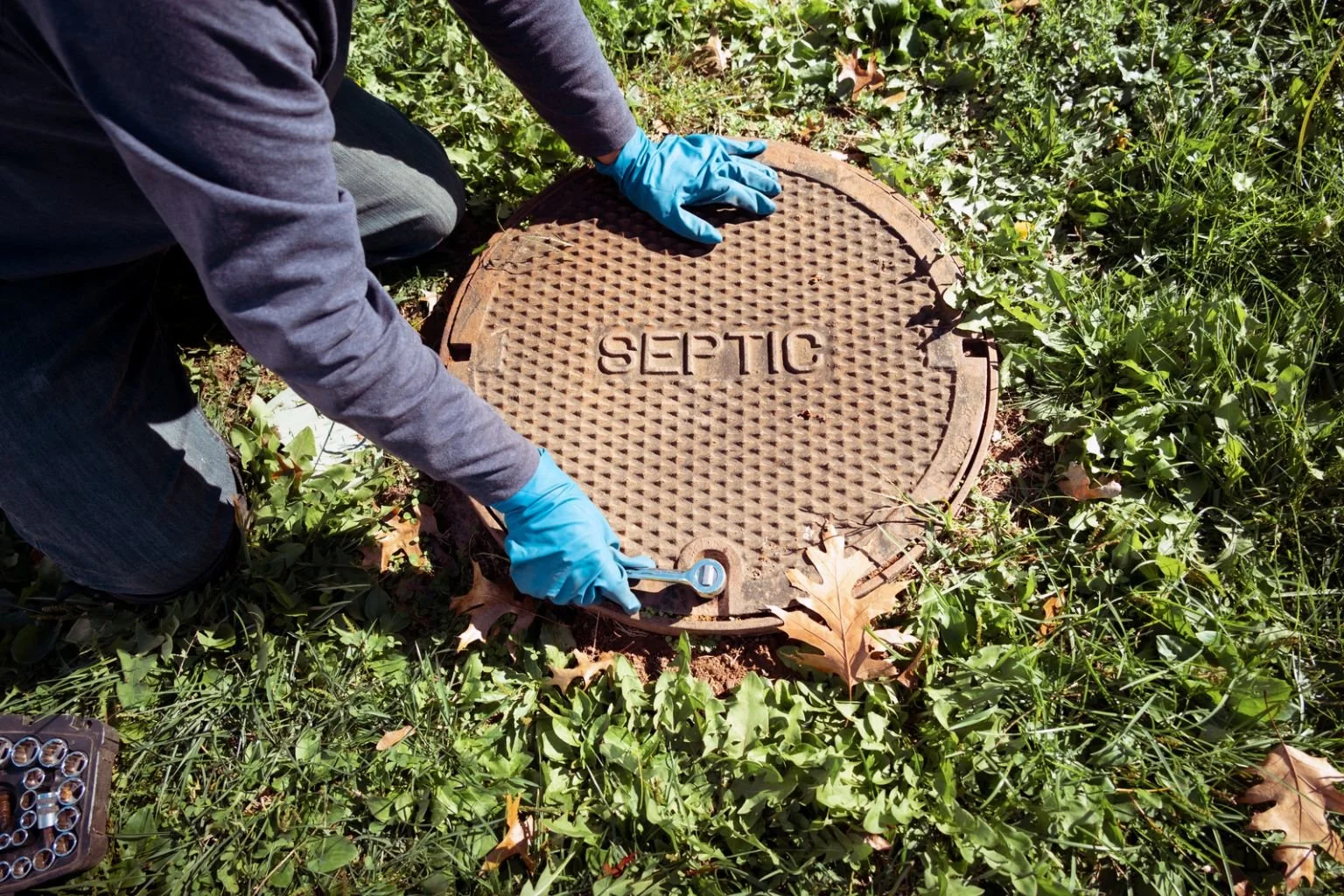
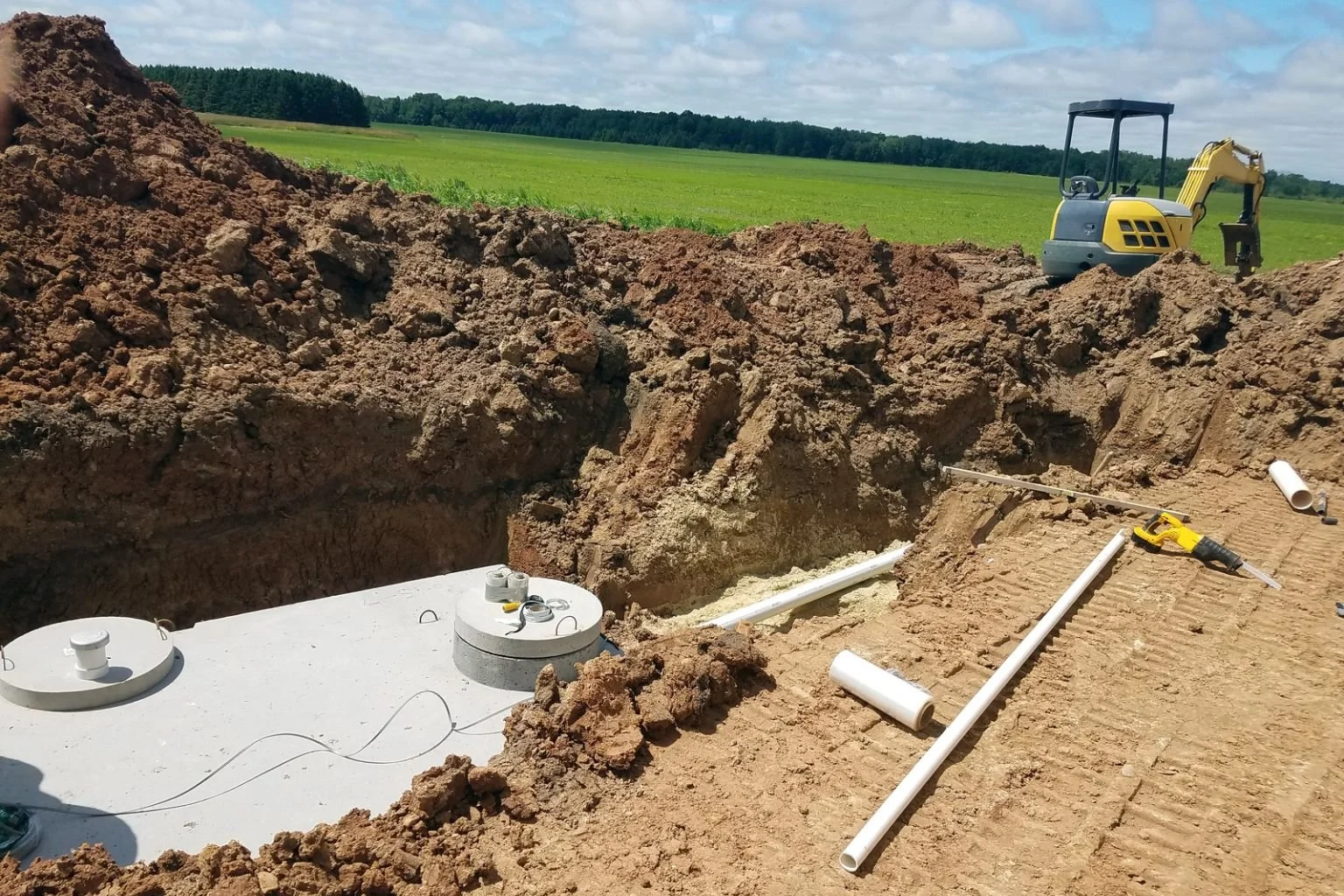
A private septic system manages household wastewater. It generally includes a tank and an underground treatment or disposal area.
Because much of the system is buried, you cannot reliably determine its condition simply by walking around the property.
Before buying, ask:
Where are the septic tank and disposal field located?
How old is the system?
Are installation or approval records available?
When was the tank last pumped?
Have there been repairs, backups, drainage problems, or unusual odours?
Can the inspection access points be located and opened?
An ordinary home inspection may not include a specialized septic assessment. Discuss what additional inspections are appropriate before purchasing.
A real Annapolis Valley example: The septic opening nobody could find
During a property sale in the Annapolis Valley, REALTOR® Morgan Worobec encountered a problem that illustrates why septic-system records and accessibility matter.
The property was under offer, and the buyer's inspection process was underway. But the septic access opening couldn't be located.
The sellers weren't the original owners and hadn't inspected the septic system when they purchased the property. They were relying on a previous owner's description of where the opening was supposed to be.
That information turned out to be approximately 20 feet off.
Locating the access became an unexpectedly difficult job. Multiple holes were excavated before the opening was finally found. The sellers, Morgan, and the buyer's agent were all involved in the effort.
Once access was established, the inspection went ahead and identified a couple of minor issues.
The sellers also installed access caps so the new homeowners would have an easier time locating and accessing the system in the future.
The lesson for buyers: Don't assume that because a property has a septic system, its location is accurately documented or its inspection points are accessible.
If the access points can't be located, the inspection may be delayed while additional work is arranged.
Deep excavation presents serious collapse hazards and should be handled by qualified professionals with appropriate safety measures.
What About Inspection Conditions in Nova Scotia?
When purchasing a home with a private well or septic system, discuss the appropriate inspections and purchase conditions with your REALTOR® before submitting an offer.
The Nova Scotia Real Estate Commission has a specific Water and Septic Schedule (Form 431) that can be attached to an Agreement of Purchase and Sale.
The schedule addresses matters such as seller-provided records, access to systems, inspections, and buyer conditions.
The exact obligations depend on the agreement and its applicable terms.
Inspection deadlines are important. Buyers need enough time to arrange testing, receive results, and investigate any concerns before deciding whether their conditions are satisfied.
Your REALTOR® and lawyer can help explain the agreement and the steps required.
Your Rural Home Buying Checklist
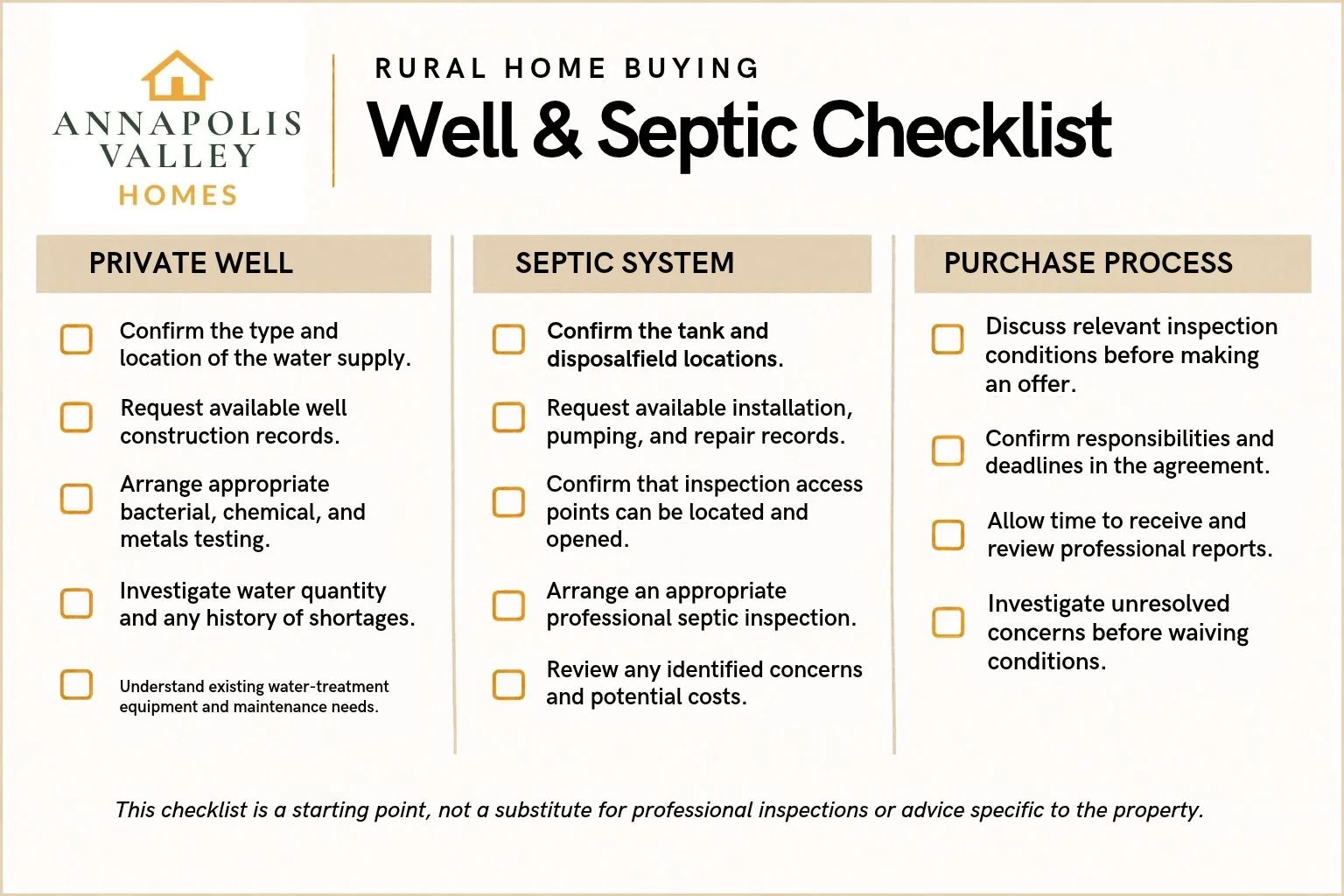
Before finalizing a rural home purchase, work through these questions with your REALTOR® and appropriate professionals.
Private well
Confirm the type and location of the water supply.
Request available well construction records.
Arrange appropriate bacterial, chemical, and metals testing.
Investigate water quantity and any history of shortages.
Understand existing water-treatment equipment and maintenance needs.
Septic system
Confirm the tank and disposal-field locations.
Request available installation, pumping, and repair records.
Confirm that inspection access points can be located and opened.
Arrange an appropriate professional septic inspection.
Review any identified concerns and potential costs.
Purchase process
Discuss relevant inspection conditions before making an offer.
Confirm responsibilities and deadlines in the agreement.
Allow time to receive and review professional reports.
Investigate unresolved concerns before waiving conditions.
This checklist is a starting point, not a substitute for professional inspections or advice specific to the property.
Buying From Outside Nova Scotia? Plan Your Inspections Early
If you're moving to the Annapolis Valley from Ontario, British Columbia, or another province, coordinating inspections remotely can add complexity.
You may only have a few days available to view properties in person. If you make an offer, some inspections may need to happen after you've returned home.
Morgan encourages out-of-province buyers to understand the property and their inspection options early.
He can help coordinate with local professionals, communicate updates, and ensure buyers receive the information they need to make decisions.
During remote video walkthroughs, Morgan also pays attention to potential concerns that photographs may not reveal, such as water staining, visible plumbing or electrical issues, window condition, drafts, or unusual odours.
These observations aren't a replacement for professional inspections, but they can help buyers decide what deserves closer investigation.
For more guidance, read Buying a Home in the Annapolis Valley From Out of Province.
Work With a Local REALTOR® Who Understands Rural Properties
Buying a rural home involves more than choosing the right location, floor plan, or acreage.
Understanding the property's water supply, wastewater system, and maintenance responsibilities can help you avoid unpleasant surprises.
Morgan Worobec brings a background in land surveying to his work as an Annapolis Valley REALTOR®. That experience gives him an additional perspective when helping buyers understand rural properties and identify questions worth investigating.
He helps buyers navigate the purchasing process, coordinate with qualified professionals, and make informed decisions about the properties they're considering.
His role is to help buyers ask the right questions, recognize when further investigation is needed, and connect with qualified professionals.
Considering a rural home in the Annapolis Valley?
Contact Morgan Worobec to discuss your property search and what to investigate before making an offer.
